During the Spring Festival, lighting fireworks is a traditional custom. However, incidents caused by this practice have been frequent in recent years. Just in January 2025, multiple such incidents were reported:
- l On January 5th, residents setting off firecrackers near a chemical plant in Jinan, Shandong, caused a small-scale explosion, damaging plant facilities and surrounding houses.
- l On January 10th, a child in Foshan, Guangdong, suffered severe hand injuries due to improper handling of firecrackers.
- On January 15th, a fire triggered by firecrackers in a residential community in Changsha, Hunan, damaged multiple homes and injured residents.
- l On January 22nd, in Zhengzhou, Henan, children playing with firecrackers ignited cars in a parking lot, destroying several vehicles and damaging facilities.
- l On January 28th, firecrackers set off at the entrance of a shop in Hangzhou, Zhejiang, caused a fire inside, affecting neighboring shops.
- l On January 30th, in Neijiang, Sichuan, a child threw a firecracker into a septic tank, causing an explosion that damaged luxury cars and public infrastructure.
These incidents pose severe threats to people's lives and property. While urban firefighting communication systems play a crucial role in responding to such accidents, they also face numerous challenges. Analyzing these difficulties in depth and proposing corresponding solutions is of great significance for improving the efficiency of fire and emergency rescue operations.
I. Challenges in Urban Firefighting Communication
1. Signal Coverage Issues in Complex Urban Environments
- Building Obstructions:Dense high-rise buildings easily cause signal blind spots, while signals struggle to penetrate enclosed spaces like basements and tunnels.
- Electromagnetic Interference:The high density of wireless devices (e.g., Wi-Fi, base stations, industrial equipment) in cities can easily interfere with dedicated firefighting frequency bands.
- Dynamic Changing Scenarios:Factors like high temperatures, thick smoke, and collapses at a fire scene can further damage communication equipment or disrupt signal transmission.
2. Capacity and Stability of Communication Systems
- High Concurrency Demand:During large-scale disasters, simultaneous access by multiple departments (fire, medical, police) can easily lead to channel congestion.
- Network Dependency Risk:Some cities rely on public communication networks e.g.,4G/5G. Once base stations are damaged or overloaded, communication may be interrupted.
- Reliability in Extreme Environments:Equipment must maintain stable operation under harsh conditions like high temperatures, humidity, and vibration.
3. Difficulty in Cross-Department/Cross-Team Communication
Emergency teams and other rescue forces like local specialized fire brigades have independent communication systems, making it difficult to quickly establish a coordinated operations communication network and join the overall on-site command unit's communication network during coordinated operations at disaster scenes.
II. Advantages of Mesh Networks in Urban Firefighting Communication
1. Decentralization for Enhanced Reliability
Mesh networks do not rely on fixed base stations or other central nodes; each node can act as a communication relay. At a Spring Festival firecracker fire scene, even if conventional communication nodes fail in some areas due to electromagnetic interference or physical damage, the Mesh network can maintain communication links through self-adjustment and reconnection between nodes. This ensures information exchange between the fire command center and frontline rescuers, preventing a complete communication breakdown due to central node failure.
2. Flexible Networking to Adapt to Complex Environments
Mesh networks can quickly and flexibly construct communication networks based on the actual terrain and building distribution at the fire scene. In remote areas or complex buildings, Mesh network nodes can be carried by firefighters or deployed at key locations, automatically forming a communication network with appropriate coverage. This effectively addresses the insufficient coverage of 350MHz networking modes in these areas, ensuring the timely delivery of rescue commands and real-time feedback of on-site conditions.
3. Rapid Response to Improve Rescue Efficiency
Mesh networks feature quick deployment and startup capabilities. Once a firecracker-induced fire occurs, firefighters can rapidly deploy Mesh network equipment on-site, establishing an effective communication link in a very short time. This allows rescuers to contact the command center immediately and initiate rescue operations quickly, buying precious time for fire control and life-saving. Furthermore, in multi-department coordinated rescue operations,Mesh networks can more conveniently achieve interconnection and interoperability between communication devices of different departments, breaking down information barriers and promoting coordinated operations.
III. Suntor's Urban Firefighting Communication Three-Level Operational
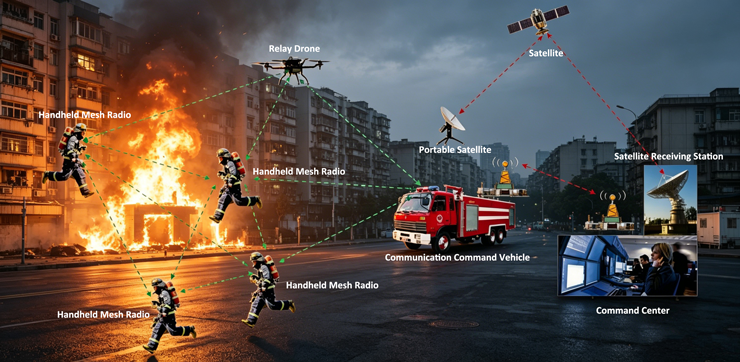
1. Solution Core and Objectives
Currently, firefighting agencies at all levels across the nation are basically equipped with 350MHz/800MHz public security firefighting wireless communication networks. Some more developed regions have also progressively built or completed trunked communication networks. Building upon this foundation, Suntor has developed the Broad-Narrowband Integrated Urban Firefighting Communication Three-Level Operations Solution. The core of the solution lies in integrating broadband and narrowband communication technologies to build a flexible, efficient, and reliable communication network that meets the diverse needs of urban firefighting communication. Its goal is to provide firefighters with real-time, accurate on-site information, ensuring smooth command and dispatch, thereby enhancing the emergency response and handling capabilities of urban firefighting.
Detailed Three-Level Network Operations
Level 1 Network (Command Network)
Under normal public network trunked communication system operation, it serves as the primary command link. In case of public network walkie-talkie failure, the headquarters (or jurisdictional detachment) sets up a relay base station using the provincial command-dedicated networked channel. This ensures communication between the forward command post, the rear command center, and en-route reinforcement forces.
Level 2 Network (On-site Command Network)
Typically composed of vehicle-mounted or base stations, etc., it is suitable for communication between on-site commanders, staff officers, and commanders of participating squadrons. It ensures communication between the forward command post and commanders of all participating forces.
Level 3 Network (Firefighting Combat Network)
Typically uses handheld and man-portable radios. It is suitable for communication within each on-site squadron between commanders (front/rear), between firefighters and squads, between drivers and hosemen, and among special service rescue squad members. Simultaneously, UAVs equipped with airborne radios utilize their flight capability to provide aerial signal relay and coverage.
2. Solution Composition and System Features
(1) Equipment Composition
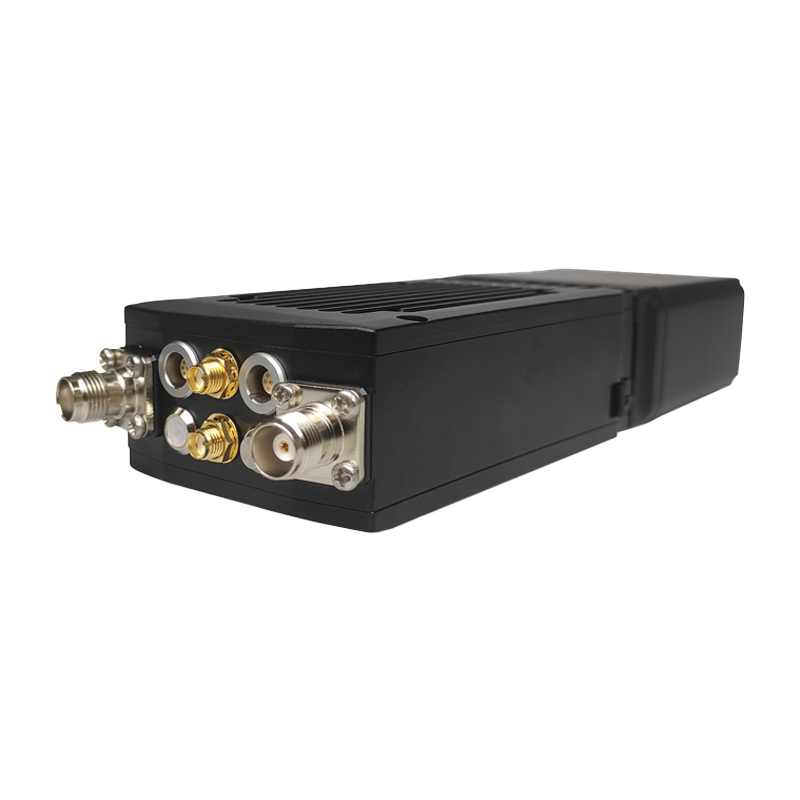
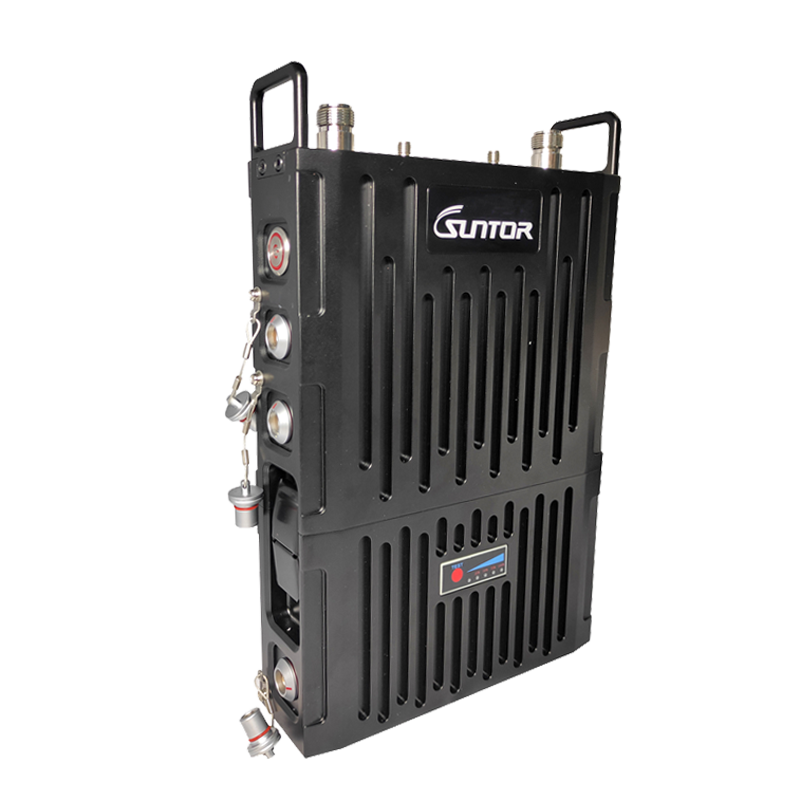
Vehicle-mounted Mesh Equipment:Configured on fire trucks to complete command communication for firefighting forces on the move.
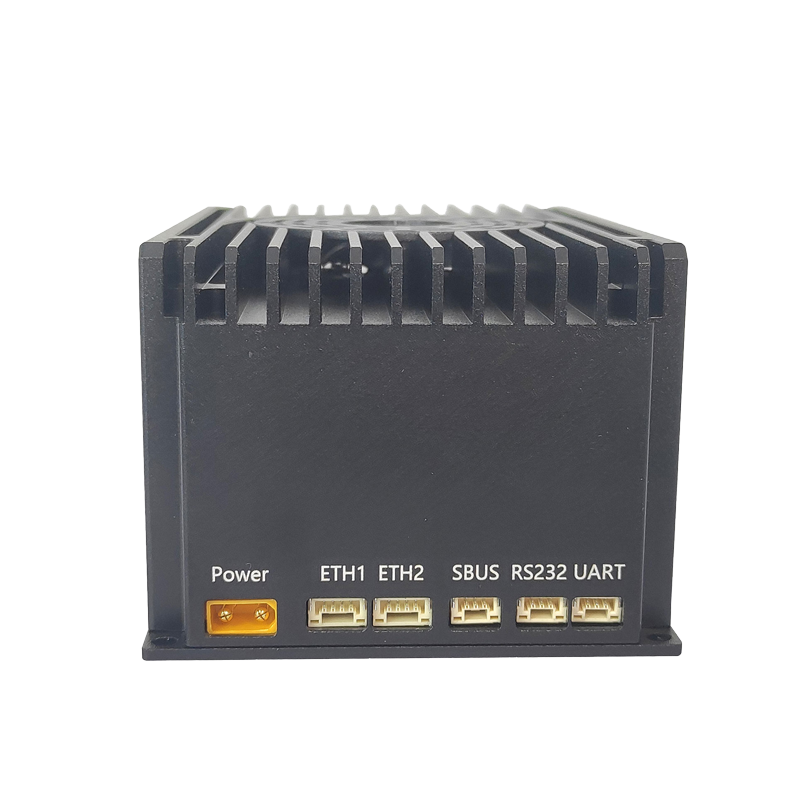
Airborne Mesh Equipment: UAV-mounted, utilizing flight capability to provide aerial signal coverage.
Handheld/Man-portable Individual Equipment: Configured for commanders, squad leaders, and firefighters at the fire and rescue scene to complete on-site command and voice communication between individuals.
Fixed Mesh Base Station: Serves as the backbone node of the Mesh, configured at fire command centers and stations at all levels to complete command communication between them and the rescue scene.
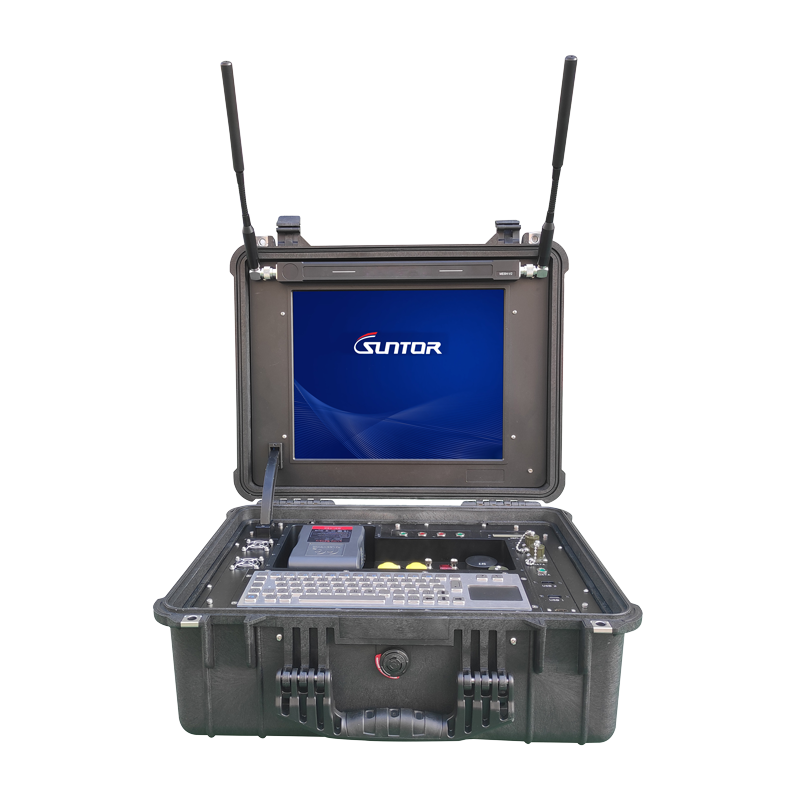
Visual Communication System Command & Dispatch Platform: Combined with front-end emergency terminals, it forms a fully functional emergency command and dispatch system, providing emergency services such as emergency team creation, user grouping, video calls, emergency grouping, video conferencing, and electronic maps.
(2) System Features
Integrated Air-Ground System: Integrates satellite communication, broadband/narrowband wireless communication, and on-site command, effectively responding to extreme "three-interruption" (power, network, road) scenarios.
Convergence and Coordination: Terminal multi-mode convergence, network public-private and broadband-narrowband convergence, on-site command service integration, forming an efficient and coordinated on-site emergency communication support system.
Rapid Deployment: Guided by practical application, equipment is lightweight, compact, has long endurance, is simple to operate with easy procedures, features automatic networking, enables rapid deployment, and is ready for immediate use.
Comprehensive System: A rich and complete product family integrates voice, video, positioning, and satellite capabilities, available in portable, man-portable, and airborne forms, providing a full range of products and solutions to meet the construction requirements of fire and rescue departments at all levels.
IV. Solution Advantages
1. Strong Anti-Interference, Ensuring Signal Stability
Suntor's wireless Mesh employs advanced anti-interference technology, effectively filtering out interference signals in complex electromagnetic environments. In scenarios with strong electromagnetic interference from Spring Festival fireworks, its Mesh equipment can automatically adjust communication frequency and power, avoiding interference sources, ensuring stable communication links, and guaranteeing unimpeded information transmission between the fire command center and on-site rescuers, enabling precise and efficient command delivery and on-site feedback.
2. Flexible Coverage, Solving Communication Dead Zones
The solution includes various types of Mesh equipment, such as individual, vehicle-mounted, and airborne devices. In remote areas or urban-rural fringes, old residential areas with insufficient base station coverage, firefighters can carry individual Mesh equipment to quickly build temporary communication networks. For complex fire scenes severely obstructed by buildings, utilizing UAVs equipped with airborne Mesh devices allows flexible aerial deployment, breaking through building obstruction limitations, achieving omnidirectional signal coverage, eliminating communication dead zones, and ensuring timely delivery of rescue commands at all levels.
3. Efficient Information Exchange, Promoting Coordinated Rescue
Suntor's wireless Mesh possesses powerful information processing and transmission capabilities, enabling the rapid and accurate transmission of various types of information at chaotic fire scenes. Moreover, its open communication protocol facilitates interfacing with other departments' communication systems. During multi-department coordinated rescue, it can quickly establish a unified communication platform, achieving real-time information sharing and efficient communication between departments such as firefighting, public security, medical, and traffic, breaking down information barriers, and enhancing joint rescue efficiency.
V. Summary
Suntor's Urban Firefighting Communication Three-Level Operations Solution features flexible networking, efficient transmission, security, reliability, and ease of deployment. It can meet the diverse needs of urban firefighting communication, providing strong communication support for urban fire safety. It has served numerous clients and achieved successful applications in multiple firefighting communication projects.